1. Thank you for joining me! Can you tell me a little bit about yourself?
I’m a Digital Marketing Manager with about eight years of experience in paid media and digital strategy. I’ve been with 2TON for nearly six years, where I manage a small but mighty team of digital ad gurus while also overseeing client accounts end-to-end, from strategy development to full campaign implementation and execution. What I enjoy most is using performance data to shape creative decisions and solve marketing challenges, so brands can reach the right audience more effectively.




2. How do you typically approach the start of a new digital campaign? What’s the first thing you look at or think about?
I typically like to start with the why. Before I dive into platforms, budgets, or provide ad creative direction, I want to better understand the business goal. Usually, that’s lead generation, awareness, long-term growth, or a healthy mix. From there, I look closely at the audience we need to reach to help achieve those goals: who they are, where they spend time online, and what problem we’re solving for them. That foundation guides every decision that follows.
3. When you’re building out a strategy, how do you balance creative vision with data-driven decision-making?
I see creative and data as partners. Data helps inform what we should test and where we should focus, while creative determines how we show up. I’ll often use competitor research and performance insights to help shape the creative direction I provide, then let strong storytelling do its job. The best strategies leave room to test, learn, and adjust rather than locking into a single idea too early.
4. What’s your process for identifying digital trends early?
I try to pay close attention to platform updates, any new beta releases, or announcements from major advertising platforms. I work closely with my team to take note of any patterns we start to see across our accounts. I also like to subscribe to newsletters from companies that specialize in catching and summarizing these trends very early on.
5. How do you determine which trends are worth jumping on and which ones to skip?
Not every trend fits every brand. I always ask: does this align with the client’s goals, audience, and resources? If a trend requires a level of creative or budget commitment that won’t realistically perform, it’s usually not worth forcing. I’m a big believer in testing trends thoughtfully rather than chasing them blindly.
6. What’s one digital channel or tactic you think brands are seriously underutilizing right now?
Intent-based strategies paired with smart retargeting are still incredibly powerful, yet often under-leveraged. Brands sometimes focus too heavily on awareness without fully nurturing users who have already shown interest. When done right, those lower-funnel touchpoints can dramatically improve efficiency and conversion quality. However, there are often times when budget can be a limiting factor.
7. How do you help clients understand the “why” behind a digital decision, especially when the strategy involves something new or unfamiliar?
Full transparency is key. I try to clearly connect every recommendation back to their business goals and explain what success looks like and how important it is to test and learn. When clients understand why a strategy exists and what we’re watching for, they’re much more comfortable embracing something new.
8. When you’re juggling multiple fast-moving campaigns, how do you keep yourself and your team inspired and aligned?
Clear communication and trust go a long way. We focus on shared goals, regular check-ins, and celebrating wins (even small ones!). I also encourage my team to bring ideas forward and test new approaches. Feeling ownership over their work helps keep everyone engaged, even when things move quickly.
9. What’s something you wish more clients understood about the digital marketing space?
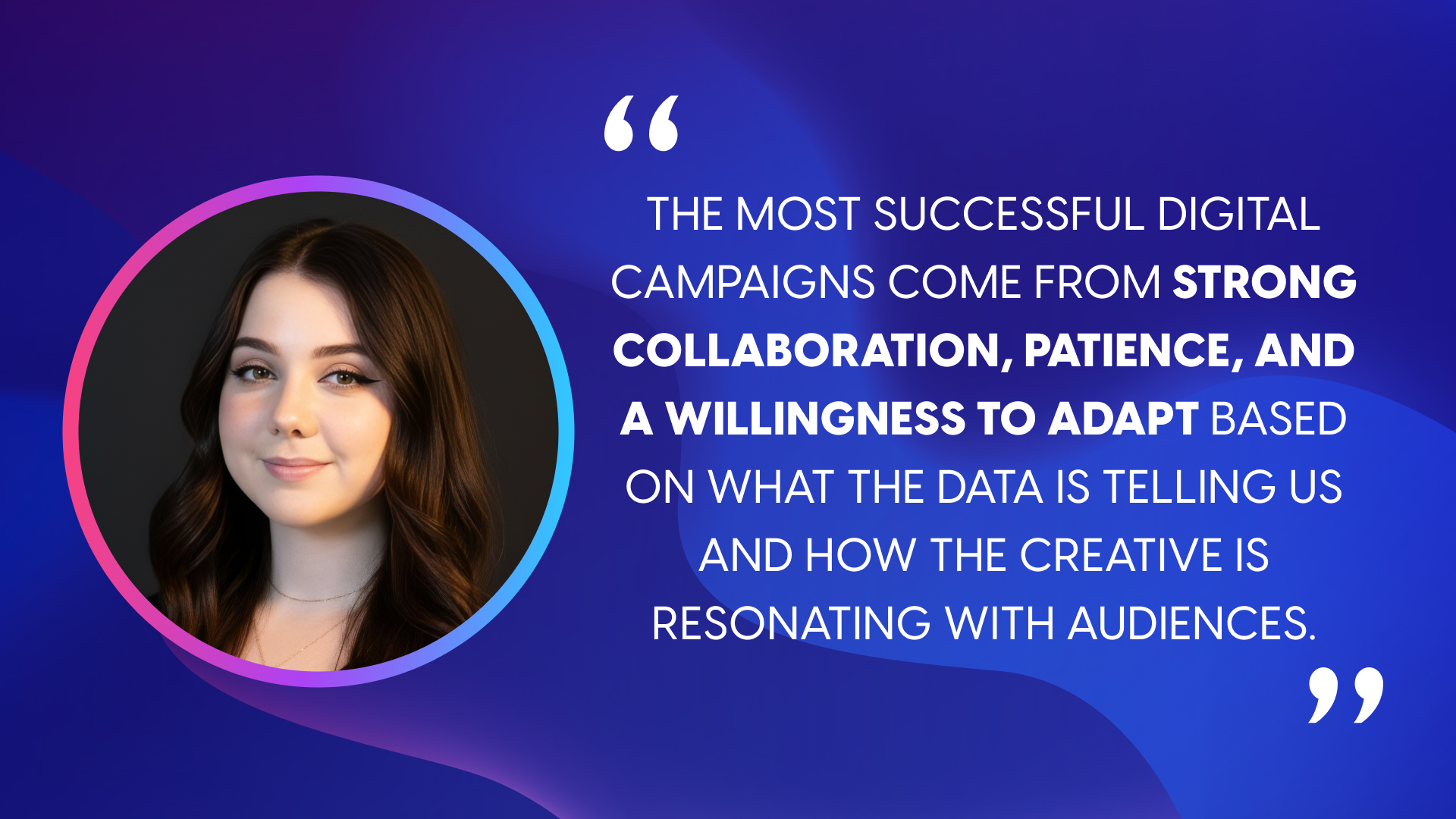
Digital marketing isn’t instant or linear. Performance will always fluctuate, the algorithms will constantly change, and the learning phases are part of the process. The most successful digital campaigns come from strong collaboration, patience, and a willingness to adapt based on what the data is telling us and how the creative is resonating with audiences.
10. And finally, how do you anticipate AI, automation, or personalization evolving in the marketing world, and how are you preparing for that shift?
I think AI will continue to streamline execution and basic, surface-level insights faster, but human strategy will always remain crucial and essential. I believe the best opportunity would be to use these tools to help free up time for deeper thinking, building stronger creative, and providing more personality into each brand. I’m focused on staying up to date with the latest tools that we have, testing things responsibly, and making sure that we’re using technology to enhance our thoughtful marketing approach, not replace it.